
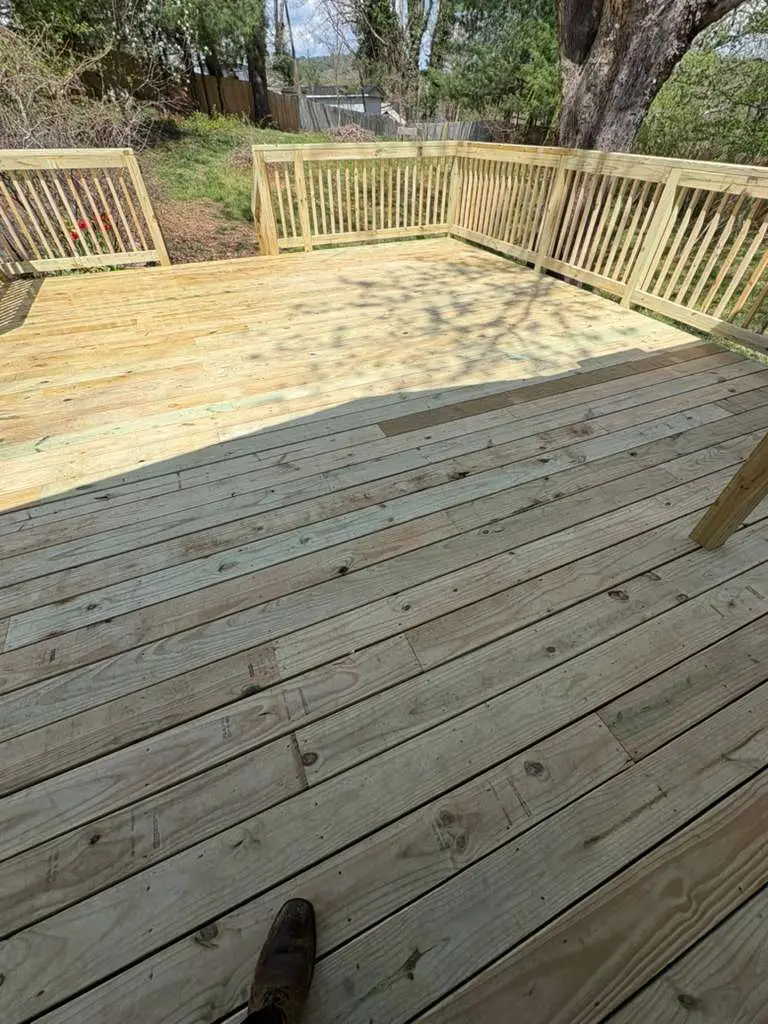
Wood fencing has been a staple of American homes for generations — and for good reason. It offers a natural, warm aesthetic that complements virtually any architectural style, delivers real privacy and security, and can be customized to fit almost any property layout. In Asheville, NC and throughout Western North Carolina, wood fencing remains one of the most popular choices among homeowners looking for a classic look backed by solid performance. At Bernardo’s Landscaping LLC, we’ve installed wood fences across Asheville and the surrounding 30-mile area for over 16 years, and we know what it takes to build a fence that looks great and holds up in this region’s climate. Here’s everything you need to know before getting started.
The Benefits of Wood Fencing for Asheville Homeowners
Wood fencing offers a combination of practical and aesthetic advantages that continue to make it a top choice in residential landscaping across Western NC.
- Natural beauty that fits any setting. Wood blends seamlessly into Asheville’s mountain landscape and residential neighborhoods in a way that synthetic materials simply can’t replicate. Whether your home is traditional, craftsman, or modern, a well-built wood fence complements it naturally.
- Customizable to your exact needs. Wood can be cut, shaped, stained, painted, and designed in virtually any configuration — making it one of the most flexible fencing materials available for unique lot shapes, slopes, and style preferences.
- Strong privacy performance. A solid wood fence built to the right height provides excellent screening from neighboring properties, street traffic, and surrounding areas — giving your backyard the seclusion you’re looking for.
- Cost-effective upfront investment. Compared to vinyl and metal fencing, wood typically offers a lower initial installation cost, making it an accessible option for homeowners working within a defined budget.
- Adds curb appeal and property value. A well-maintained wood fence enhances the overall appearance of your property and signals care and quality to potential buyers if you ever decide to sell.
Popular Wood Fence Styles for Western NC Homes
One of the biggest advantages of wood fencing is the variety of styles available. The right style depends on your privacy needs, your home’s design, and how the fence will be used.
- Privacy fence. Solid vertical boards installed tightly side by side with no gaps, providing maximum screening. This is the most common style for backyards where privacy from neighbors and the street is the primary goal.
- Board-on-board fence. Boards are installed on alternating sides of the rail, overlapping slightly to create a solid visual barrier while allowing some airflow through the fence. This style looks attractive from both sides — ideal for shared property lines.
- Shadowbox fence. Similar to board-on-board but with a more symmetrical, balanced appearance. Shadowbox fencing is popular in neighborhoods where the fence is visible from multiple angles and aesthetics on both sides matter.
- Picket fence. The classic open-style fence with evenly spaced vertical boards. Picket fencing defines boundaries and adds charm without blocking sightlines — best suited for front yards and garden borders rather than privacy applications.
- Split rail fence. A rustic, open style using horizontal rails between posts with minimal vertical boards. Split rail fencing works well for defining property boundaries on larger lots and pairs naturally with Asheville’s mountain surroundings.
Pressure-Treated Wood: The Right Material for Western NC’s Climate
Not all wood fencing performs equally in Western North Carolina’s humid, rainfall-heavy environment. Choosing the right lumber is critical to how long your fence lasts.
- Pressure-treated lumber is the standard for outdoor fencing in this region. The treatment process forces preservatives deep into the wood fibers, making it resistant to rot, moisture damage, and insect activity — all significant concerns in Western NC’s climate.
- Naturally resistant wood species are also an option. Cedar and redwood contain natural oils that repel moisture and insects, giving them a longer lifespan than untreated lumber without the chemical treatment process. They also take stain beautifully.
- Avoid untreated standard lumber for ground contact or exterior use. Untreated pine and similar species deteriorate quickly when exposed to Western NC’s humidity and rainfall, leading to rot, warping, and premature failure.
- Proper sealing and staining extends lifespan significantly. Regardless of the wood species chosen, applying a quality exterior sealant or stain after installation — and refreshing it every two to three years — protects against moisture penetration and UV fading.
What to Expect During the Wood Fence Installation Process
Understanding what a professional wood fence installation involves helps homeowners plan effectively and set realistic expectations from start to finish.
- Property line verification. Before any posts go in the ground, confirming exact property boundaries is essential. Installing a fence even a few inches over the line can create legal disputes with neighbors, so this step is never skipped.
- Post hole digging and setting. Posts are the structural foundation of any fence. In Western NC’s soil conditions, posts are typically set in concrete at the appropriate depth to ensure stability through the region’s freeze-thaw cycles and wet winters.
- Rail installation. Horizontal rails connect the posts and provide the framework that vertical boards attach to. Proper rail spacing and alignment are critical to the finished fence’s structural integrity and appearance.
- Board installation and spacing. Vertical boards are attached to the rails according to the chosen style, with consistent spacing maintained throughout. For privacy fences, boards are set flush or overlapping; for open styles, gaps are measured evenly.
- Finishing and cleanup. Once the fence is fully assembled, the site is cleaned up, excess material is removed, and the finished installation is reviewed for alignment, levelness, and overall quality before the job is considered complete.
Maintaining Your Wood Fence in Western NC
A wood fence in Asheville’s climate requires more ongoing attention than vinyl or metal, but the maintenance is straightforward when approached on a regular schedule.
- Inspect annually for rot, cracks, and loose boards. Catching small issues early — a soft post base, a cracked board, a loose rail — prevents them from becoming structural problems that require more extensive repair.
- Clean the surface every one to two years. A gentle wash removes dirt, mildew, and algae that accumulate in Western NC’s humid environment. Pressure washing on a low setting works well for most wood fence surfaces.
- Reseal or restain every two to three years. Refreshing the protective coating on schedule is the single most effective thing you can do to extend the lifespan of a wood fence in this climate.
- Address ground contact points. The bases of fence posts and any boards close to the soil line are the most vulnerable areas for rot in wet environments. Keeping soil and mulch from building up against the wood at ground level significantly reduces moisture exposure.
Final Thoughts
Wood fencing remains one of the most versatile, attractive, and practical choices for Asheville homeowners — and when it’s built correctly with the right materials and properly maintained, it delivers years of privacy, security, and curb appeal. The key is working with an experienced local team that understands Western NC’s climate and knows how to install a fence that will stand up to everything this region throws at it.
Get Your Wood Fence Installed by Bernardo’s Landscaping LLC
At Bernardo’s Landscaping LLC, we build wood fences that are designed for Western NC’s climate and crafted to complement your Asheville property. From style selection through final installation, our licensed and insured team handles every step of the process with the attention to detail your property deserves.
Contact us today to schedule your free consultation and start planning your wood fence installation.
Recent Post

Professional Landscaping Solutions
From design and installation to long-term maintenance, our team delivers reliable service with precision and care.