Stone vs. Concrete vs. Pavers: Comparing Hardscape Materials for Western NC
Choosing a hardscape material is one of the biggest decisions in any outdoor project, and it affects far more than appearance. The material you pick determines how your walkways, steps, patios, and borders handle Western North Carolina’s heavy rainfall, freeze-thaw cycles, and sloped terrain, and how much upkeep they demand over the years. At Bernardo’s Landscaping LLC, we’ve worked with natural stone, poured concrete, and pavers on properties across Asheville, NC and the surrounding 30-mile area for over 16 years. Each material has a place, and the right choice depends on the project. Here’s an honest comparison to help you decide.
Why Material Choice Matters More in the Mountains
Hardscape materials that perform well in flat, dry climates don’t always hold up in Western NC. The region’s conditions put unusual stress on anything installed outdoors.
- Freeze-thaw cycles test every material. Water enters small cracks and pores, freezes, expands, and gradually breaks down surfaces that aren’t suited to the cycle.
- Heavy, consistent rainfall demands good drainage. Materials that shed or absorb water poorly can lead to pooling, algae growth, and slippery surfaces.
- Sloped terrain adds structural pressure. Mountain properties often need hardscape that can handle ground movement and soil pressure without cracking or shifting.
- Shade and humidity encourage moss and mildew. Wooded Asheville lots stay damp longer, so surface texture and cleanability matter more than they would elsewhere.
Natural Stone: Timeless, Durable, and Right at Home in the Mountains
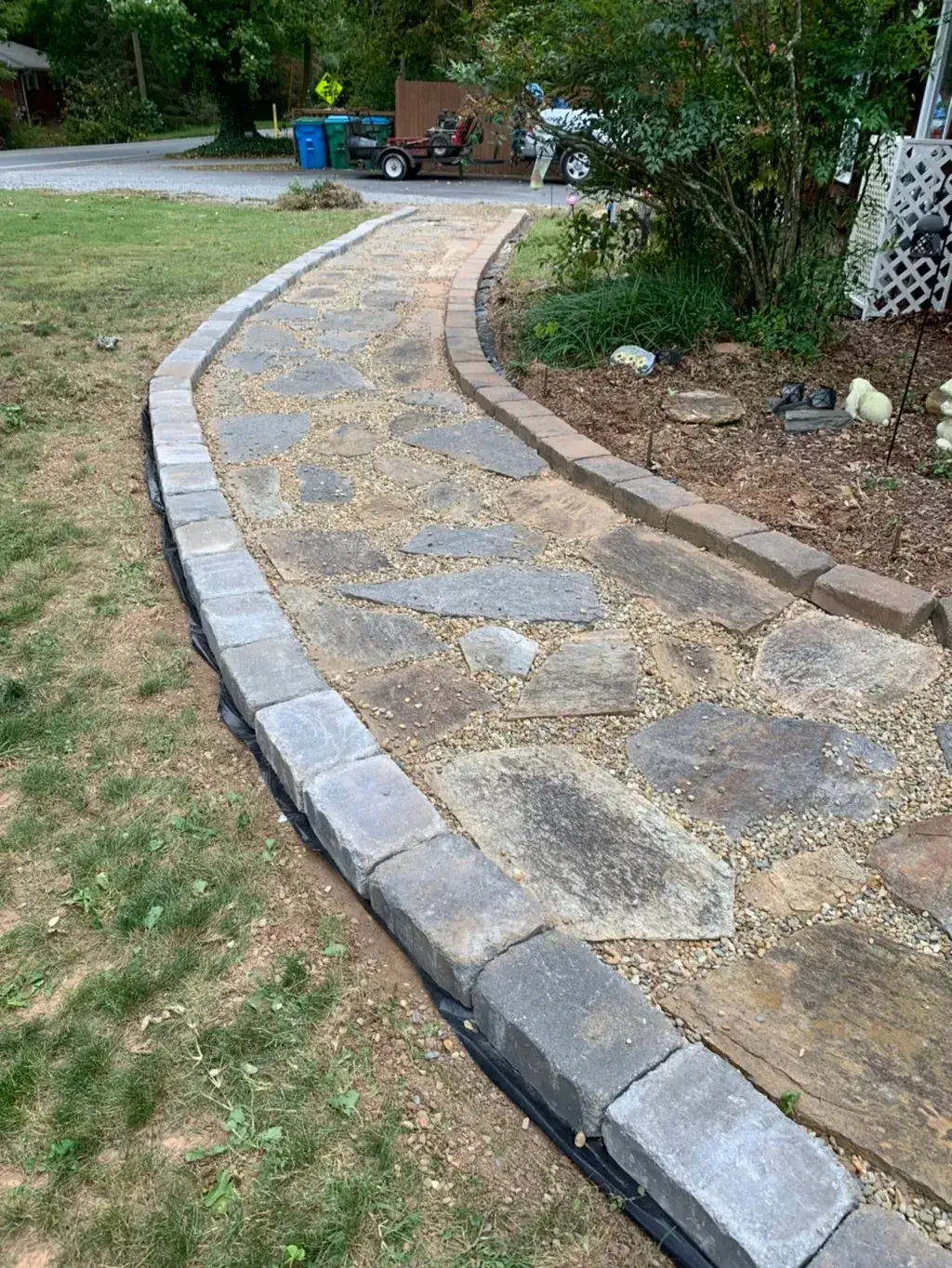
Natural stone is the most traditional hardscape material, and in Western NC it looks like it belongs to the landscape.
- Exceptional durability. Dense stone such as flagstone, fieldstone, and slate stands up to freeze-thaw cycles and heavy use, and a properly installed stone surface or wall can last for generations.
- A one-of-a-kind appearance. No two stones are identical, so every walkway, step, or wall has its own character. The variation in color and texture blends naturally with wooded and mountain settings.
- Versatility across applications. Stone works for walkways, stepping paths, retaining walls, capstones, garden borders, and steps, and it pairs well with other materials.
- Skilled installation required. Irregular shapes take experienced hands to fit and set correctly, which usually makes stone the highest-labor option.
- Higher upfront cost. Material and installation typically cost more than concrete or standard pavers, though the lifespan often justifies it.
Best for: Retaining walls, garden borders, natural-looking pathways, steps on slopes, and homeowners who want a premium, organic look.
Concrete: Practical and Budget-Friendly With Trade-Offs
Poured concrete is the most common hardscape surface in residential construction, mainly because of its cost and speed.
- Lowest upfront cost. Concrete generally costs less per square foot to install than stone or pavers, which makes it appealing for large areas and tighter budgets.
- Clean, continuous surface. A poured slab has no joints, so it’s smooth and easy to sweep, and it works well where a uniform finish is wanted.
- Finish options. Stamping, staining, and texturing can mimic stone or brick at a lower price, though the imitation rarely matches the real thing up close.
- Vulnerable to cracking. Because concrete is a single rigid slab, ground movement and freeze-thaw cycles can crack it, and Western NC’s soils and slopes make this a real concern.
- Difficult to repair invisibly. Patching a cracked section usually leaves a visible mismatch in color and texture, and fixing major damage often means replacing the entire section.
Best for: Driveways, large utilitarian areas, and projects where budget is the top priority and the ground is stable and well drained.
Pavers: The Flexible Middle Ground
Pavers combine much of the durability of stone with the consistency and cost-efficiency that homeowners often want.
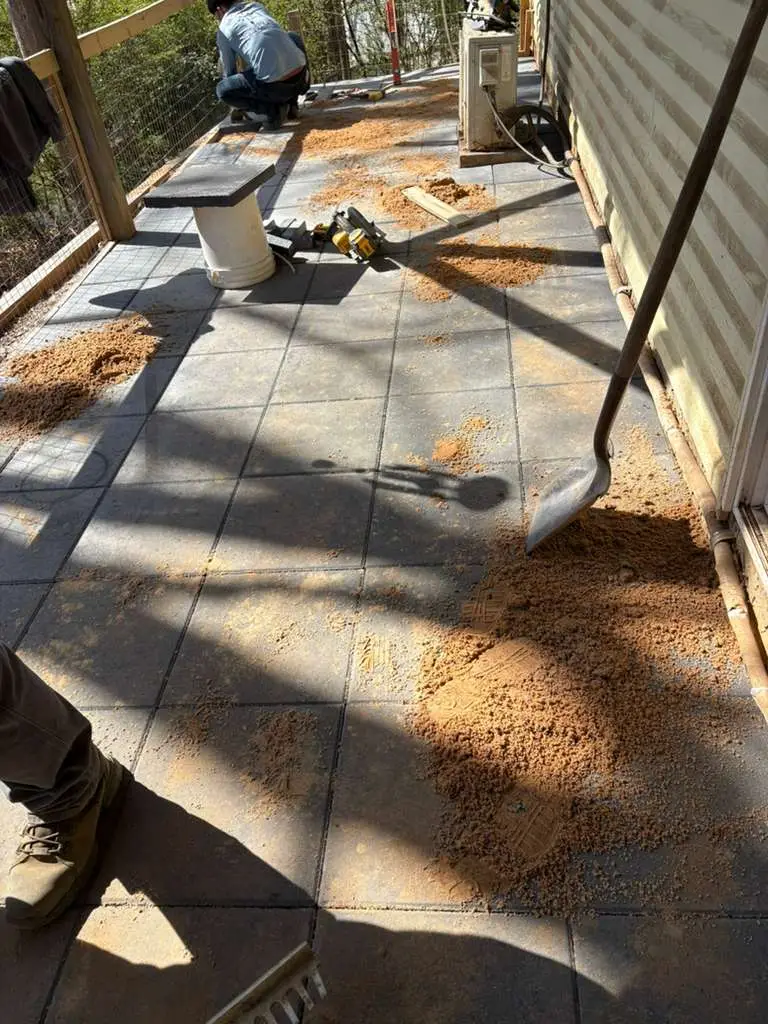
- Built to flex. Because pavers are individual units set over a compacted base, they move slightly with the ground instead of cracking, which is a major advantage in Western NC’s freeze-thaw climate.
- Easy, discreet repairs. A damaged or sunken paver can be lifted and reset or replaced without disturbing the rest of the surface.
- Excellent drainage. Water drains through the joints and into the base, which reduces pooling and slick surfaces on shaded, damp sites.
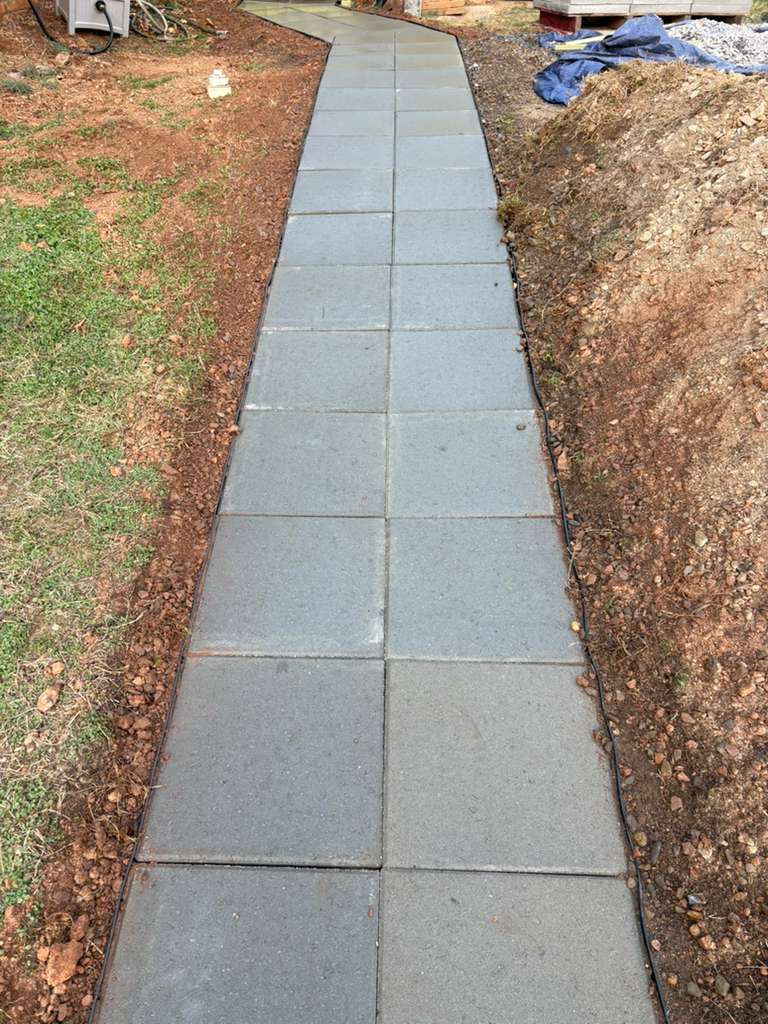
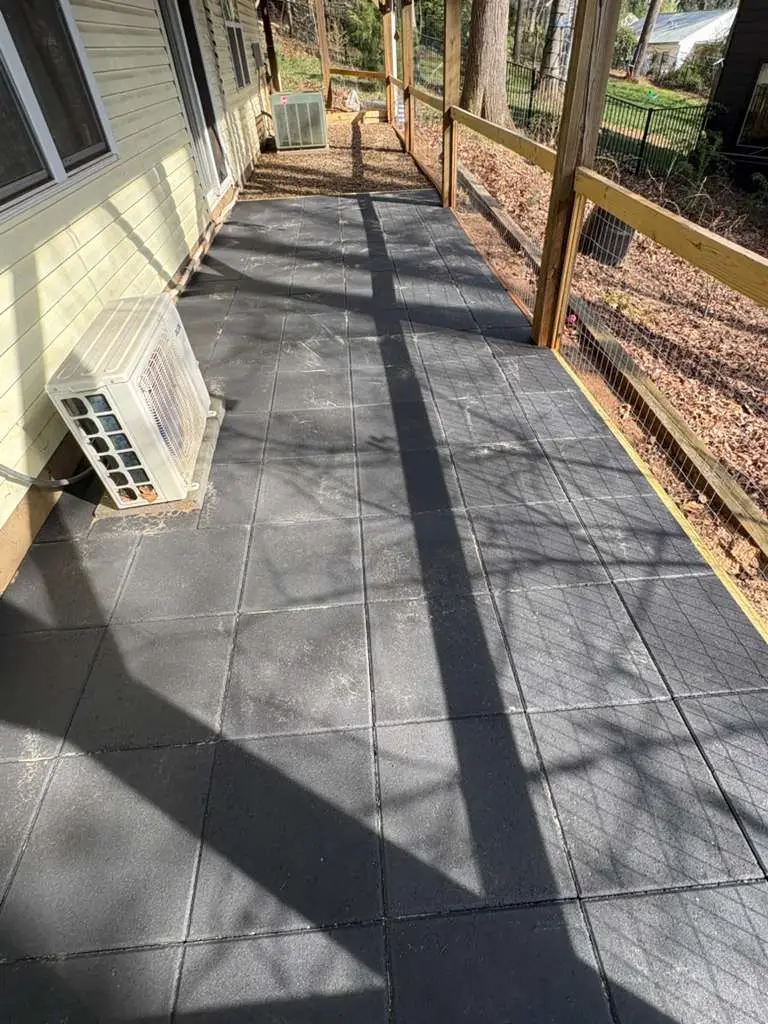
- Wide design range. Pavers come in many colors, sizes, textures, and laying patterns, from sleek charcoal squares to warm, traditional tones, so they suit modern and classic homes alike.
- Needs periodic upkeep. Joint sand should be replenished occasionally and sealing is recommended every few years, but the maintenance is simple and inexpensive.
Best for: Patios, walkways, side yard paths, covered porches, and any area where long-term performance and easy repair matter.
Matching the Material to the Project
The best choice depends less on which material is “better” and more on what the project actually needs.
- For walkways and patios: Pavers typically offer the strongest balance of durability, repairability, and cost in this region, with natural stone as the premium alternative for a more organic look.
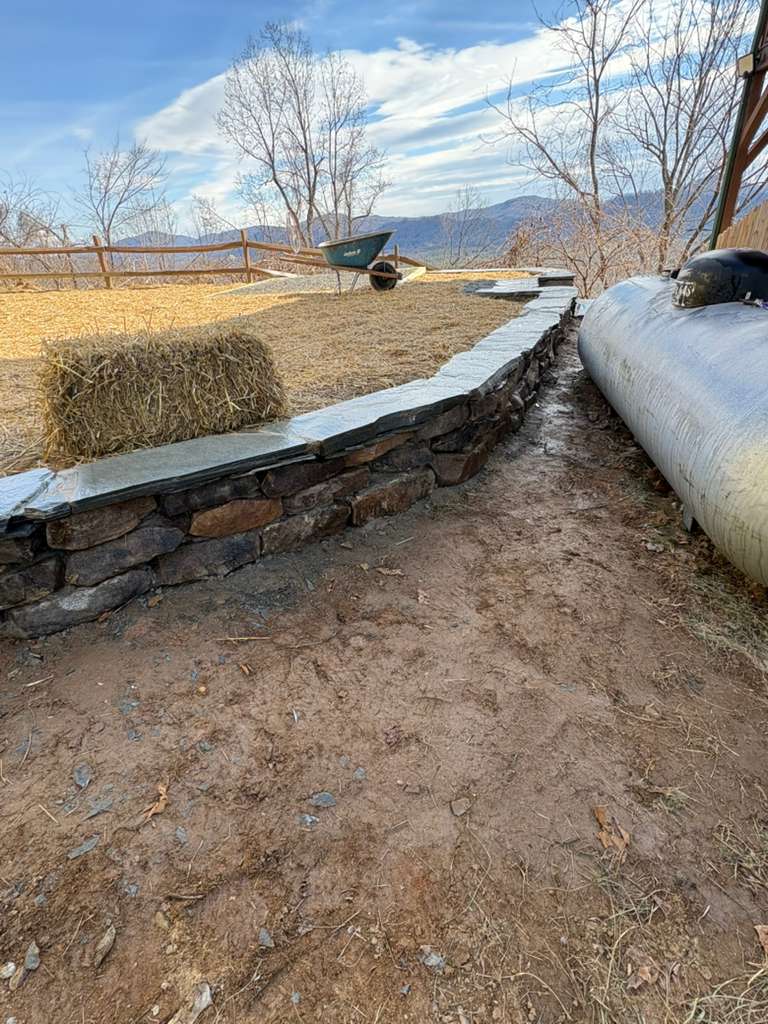
- For retaining walls and garden borders: Natural stone is hard to beat for strength and appearance, particularly on slopes and rural properties.
- For steps on sloped lots: Natural stone or well-built paver steps hold up well, while poured concrete steps are more prone to cracking and settling on uneven ground.
- For large, flat utility areas: Concrete can make sense where budget is the main driver and drainage and base conditions are favorable.
- For mixed designs: Combining materials often gives the best result, such as a paver patio with a stone retaining wall and a gravel border, so each material does the job it does best.
Cost Versus Long-Term Value
Upfront price tells only part of the story, and the cheapest option today isn’t always the most economical over time.
- Concrete costs less to install but can cost more to fix. Cracking and visible patchwork can lead to replacement sooner than homeowners expect.
- Pavers sit in the middle on price and often lead on lifetime value. Repairs are simple, the surface stays attractive for decades, and the whole installation rarely needs replacing.
- Natural stone has the highest initial investment and the longest lifespan. For features meant to last generations, such as retaining walls and signature walkways, the cost per year of service is often very competitive.
- Installation quality affects every material. A properly excavated, drained, and compacted base matters as much as the material on top, and a poor installation can undermine even the best product.
Final Thoughts
There’s no single best hardscape material for every Western NC property. Natural stone offers unmatched character and longevity, concrete offers economy and simplicity, and pavers offer flexibility, easy repair, and strong all-around performance. The right choice comes down to your site conditions, your budget, your style, and how you plan to use the space. Talking through those factors with an experienced local team before you commit is the surest way to end up with a hardscape you’ll be happy with for years.
Choose the Right Hardscape Material With Bernardo’s Landscaping LLC
At Bernardo’s Landscaping LLC, we install natural stone, paver, and mixed-material hardscapes for homeowners across Asheville, NC and the surrounding 30-mile area. Our licensed and insured team brings over 16 years of local experience to every project and will help you choose the material that fits your property, your budget, and Western NC’s demanding conditions.
Contact us today to schedule your free consultation and start planning your hardscape project.
Recent Post
Professional Landscaping Solutions
From design and installation to long-term maintenance, our team delivers reliable service with precision and care.