
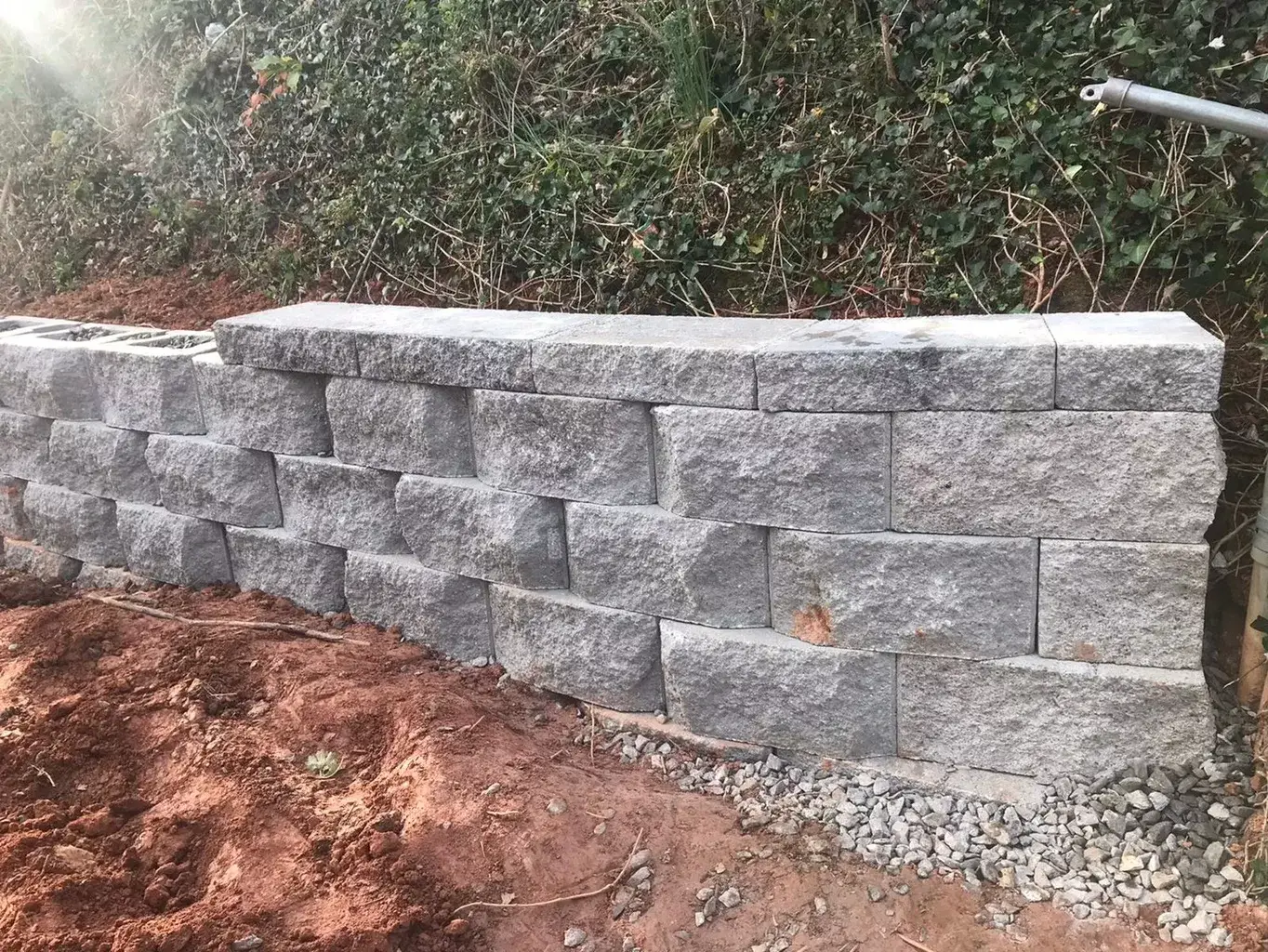
Retaining walls are built to last — but they’re not built to last forever without attention. In Western North Carolina, where freeze-thaw cycles, heavy rainfall, and sloped terrain all put constant pressure on these structures, even well-built walls can develop problems over time. The key is knowing what to look for before a minor issue turns into a major failure. At Bernardo’s Landscaping LLC, we’ve inspected and repaired retaining walls across Asheville, NC for over 16 years, and we’ve seen firsthand how catching warning signs early can save homeowners thousands in repairs. Here’s what to watch for.
Visible Cracking in the Wall Surface
Not all cracks are equal, but none of them should be ignored.
- Hairline cracks can be cosmetic in early stages, but left unaddressed they allow water to penetrate the wall structure, worsening over time — especially through winter freeze-thaw cycles.
- Horizontal cracks are a more serious warning sign. They often indicate that lateral pressure from the soil behind the wall is exceeding what the structure can handle.
- Diagonal or stair-step cracks in block or brick walls typically signal uneven settling or shifting in the wall’s foundation.
- Multiple cracks appearing at once suggest systemic structural stress rather than isolated surface damage and usually warrant professional evaluation right away.
Leaning, Tilting, or Bulging
A retaining wall that is no longer plumb — meaning it leans forward, tilts to one side, or shows visible bulging — is one of the most urgent warning signs a homeowner can spot.
- Leaning walls indicate that soil pressure behind the wall has overcome the structure’s ability to hold it back, which can worsen rapidly.
- Bulging sections suggest that water or soil buildup behind the wall has reached a critical point and the wall is beginning to give way.
- Even minor tilting that wasn’t there before is worth having inspected professionally, as these issues rarely stabilize on their own.
- A wall that has shifted at its base may have drainage or foundation problems that need to be addressed before any repair or replacement can hold long-term.
Poor or Failed Drainage Behind the Wall
Water is often the primary culprit behind retaining wall failure in Western NC, where rainfall is consistent and heavy rain events are common.
- Water seeping through the wall face after rain is a sign that drainage behind the wall is not functioning correctly.
- Soggy or saturated soil directly behind the wall indicates water is building up and increasing pressure on the structure.
- Erosion at the base of the wall suggests water is finding its way around the wall rather than through it, undermining its foundation over time.
- Absence of weep holes or blocked drainage outlets on older walls is a common cause of moisture buildup and premature wall failure.
Separation Between Wall Sections or Panels
Gaps and separation in a retaining wall’s structure are a clear indicator that something has shifted or settled unevenly.
- Gaps between individual blocks or stones suggest the wall is no longer functioning as a unified structure and is at greater risk of collapse under pressure.
- Separation at corners or ends often points to foundation movement or inadequate anchoring when the wall was originally built.
- Panels pulling away from the hillside in timber or wood retaining walls can indicate rot at the anchor points, reducing the wall’s ability to hold soil effectively.
- Visible displacement in tiered walls means one or more sections have moved independently, creating uneven pressure distribution across the entire structure.
Soil Erosion or Shifting Behind the Wall
The purpose of a retaining wall is to hold soil in place. If you’re seeing signs that it’s no longer doing that job effectively, the wall needs attention.
- Soil spilling over the top of the wall after rain events suggests the wall height may be insufficient or that drainage and grading behind it have changed.
- Sinkholes or depressions forming in the landscape above or behind the wall indicate that soil is being displaced, often by water moving through or around the wall structure.
- Plants or trees growing through wall joints can accelerate deterioration, as root systems expand and put additional pressure on the wall from within.
- Landscaping above the wall shifting or sinking is a warning that the wall’s foundation may be compromised below the surface.
When to Repair vs. When to Replace
Not every damaged retaining wall needs to be torn out and rebuilt from scratch. A professional inspection can help determine which path makes more sense.
- Repair is often appropriate for isolated cracking, minor drainage issues, or small sections of displacement caught early before the damage spreads.
- Replacement is typically the better investment when a wall is leaning significantly, shows widespread structural failure, has chronic drainage problems, or was originally built without proper foundation preparation.
- Age matters. Older walls built without modern drainage systems or engineered bases are often more cost-effective to replace than to repeatedly repair.
- Material type factors in. Timber walls have a shorter lifespan than stone or concrete block and may need full replacement sooner, especially in Western NC’s wet climate.
Final Thoughts
Your retaining wall works hard every day to protect your property, hold your landscape in place, and manage the natural slope of your yard. When it starts showing signs of stress, acting quickly is always the smarter and more affordable choice. The longer a structural issue goes unaddressed, the more extensive — and expensive — the repair tends to become.
Trust Bernardo’s Landscaping LLC With Your Retaining Wall
At Bernardo’s Landscaping LLC, we build, repair, and replace retaining walls for homeowners across Asheville, NC and the surrounding 30-mile area. Our licensed and insured team has the experience to assess your wall honestly and recommend the solution that makes the most sense for your property and your budget.
Contact us today to schedule your retaining wall inspection and protect your landscape before small problems become big ones.
Recent Post

Professional Landscaping Solutions
From design and installation to long-term maintenance, our team delivers reliable service with precision and care.